 Skip to main content


30 Oct Industrial Flooring Solution: Types, Benefits and Applications for Modern Industries
Introduction
Industrial floors are an important part of any factory, warehouse, manufacturing unit or commercial facility. These floors experience continuous movement of machinery, heavy equipment, vehicles, materials and workers. Choosing the right flooring system helps maintain safety, improve operational efficiency and protect the underlying concrete from everyday damage.
Modern Industrial Flooring Solution are designed to meet different working conditions, including heavy traffic, chemical exposure, moisture and regular cleaning requirements. However, not every flooring material is suitable for every industrial environment. Understanding the available options can help businesses select a flooring system that meets their operational needs and long-term maintenance expectations.
Why Is Industrial Flooring Important?
Industrial flooring does much more than provide a finished surface. It supports daily operations and helps create a safer, cleaner and more organized workplace.
Factories and warehouses often deal with heavy loads, forklift movement, oil spills, chemical exposure and continuous foot traffic. Ordinary concrete floors may develop cracks, surface dusting, stains and wear when exposed to these conditions without suitable protection.
Well-planned Industrial Flooring Solution help address these challenges by providing surfaces designed for specific industrial requirements.
Some important benefits include:
- Better durability: Suitable flooring systems can withstand regular industrial traffic and operational loads.
- Improved workplace safety: Appropriate surface finishes can provide slip resistance and better movement conditions.
- Easy maintenance: Seamless and properly finished surfaces can make routine cleaning easier.
- Chemical resistance: Selected coatings protect floors against specified oils, chemicals and industrial substances.
- Long-term protection: Suitable systems help protect concrete surfaces against wear and deterioration.
Different Types of Industrial Flooring Solution
Different industries require different flooring properties. Factors such as traffic intensity, exposure conditions, temperature and maintenance requirements should guide the selection process.
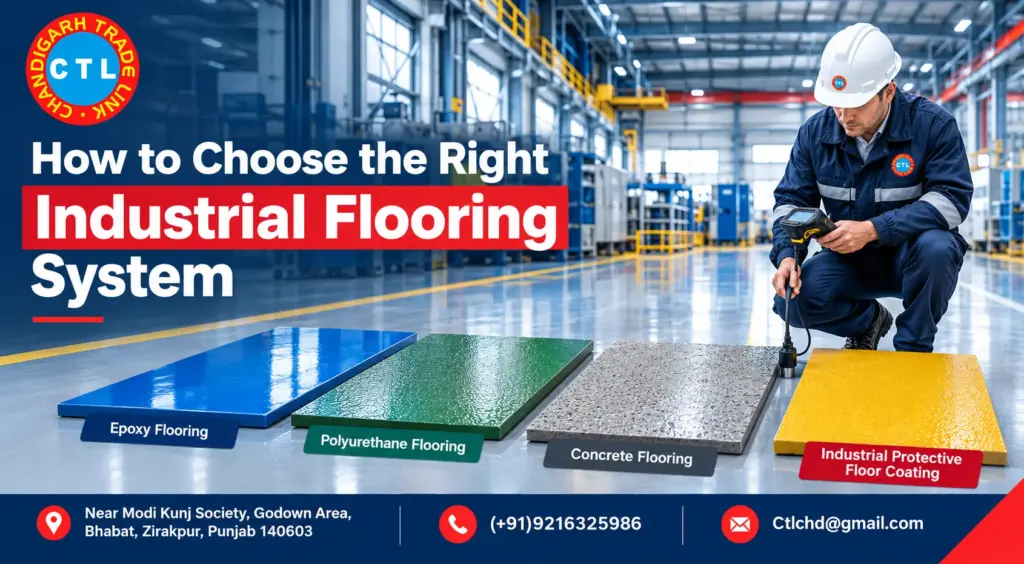
1. Epoxy Flooring
Epoxy flooring is a popular option for factories, workshops, warehouses and manufacturing facilities. It is created by applying an epoxy resin system over a suitably prepared concrete surface.
Once cured, it forms a hard, durable and relatively seamless finish. Depending on the selected system, epoxy flooring can provide resistance to abrasion, certain chemicals and regular industrial traffic.
Common applications:
- Manufacturing units
- Automotive workshops
- Warehouses
- Pharmaceutical facilities
- Commercial production areas
Epoxy flooring is particularly useful where businesses need a smooth, easy-to-clean surface. The correct formulation and thickness should be selected according to the expected loads and exposure conditions.
2. Polyurethane Flooring
Polyurethane flooring is another option for industrial environments. It is known for its flexibility and ability to accommodate certain temperature and mechanical stresses.
Some polyurethane systems are designed for environments where thermal changes, impact resistance or chemical exposure are important considerations.
Common applications:
- Food processing facilities
- Industrial kitchens
- Cold storage environments
- Manufacturing facilities
- Areas with temperature variations
The specific polyurethane formulation should be selected based on the operating temperature, cleaning process and expected chemical exposure.
3. Concrete Flooring
Concrete flooring is widely used in industrial buildings because it provides a strong structural base and can support substantial loads when properly designed.
However, untreated concrete may experience dust formation, staining, abrasion and surface deterioration over time. Surface hardeners, sealers and protective coatings can help improve its performance.
Common applications:
- Warehouses
- Distribution centres
- Manufacturing units
- Storage facilities
- Heavy-duty working areas
Concrete flooring is often a practical choice where structural load capacity is important. Its final finish and protection requirements depend on the condition and intended use of the floor.
4. Industrial Floor Coatings
Industrial floor coatings provide an additional protective layer over concrete or other suitable substrates. Depending on their composition, coatings can improve resistance to abrasion, moisture, stains and selected chemicals.
Different coating technologies are available, including epoxy, polyurethane and other specialised protective systems.
These Industrial Flooring Solution should be chosen according to the actual conditions of the facility rather than appearance alone.
Comparison of Different Industrial Flooring Types
Before choosing a flooring material, it is useful to understand how different systems perform.
| Flooring Type | Key Characteristics | Suitable Applications |
|---|---|---|
| Epoxy Flooring | Hard, smooth and chemical-resistant in suitable formulations. | Factories and workshops |
| Polyurethane Flooring | Flexible and suitable for selected temperature conditions. | Food processing and cold storage |
| Concrete Flooring | Strong structural base and load-bearing capability. | Warehouses and industrial units |
| Industrial Floor Coatings | Protective surface layer with system-dependent properties. | Manufacturing and commercial facilities |
Each flooring system has different performance characteristics. The best option depends on the substrate, operating environment, installation conditions and maintenance requirements.
How to Choose the Right Industrial Flooring System
Selecting flooring for an industrial facility requires more than comparing product prices. Businesses should evaluate their working environment and the performance expected from the finished floor.
Consider these important factors before making a decision:
- Understand the traffic requirements
Identify the type and frequency of movement within the facility. Pedestrian movement, forklifts, heavy machinery and loaded vehicles create different levels of stress on the floor. - Evaluate chemical exposure
Manufacturing facilities may experience oil spills, cleaning chemicals, acids or other substances. Check the chemical resistance information provided for the proposed flooring system. - Check the existing concrete condition
Cracks, moisture, unevenness and weak concrete can affect coating performance. The substrate should be assessed before selecting a suitable system. - Consider safety requirements
The flooring finish should suit the working environment. Areas exposed to water or oils may require an appropriate slip-resistant surface texture. - Review maintenance needs
Consider cleaning frequency, downtime, repair requirements and the expected service conditions. A suitable flooring system should support the facility’s daily operations.
Importance of Proper Floor Preparation and Installation
Even high-quality flooring materials may fail if the surface is not prepared correctly. Proper preparation is one of the most important stages of a successful flooring project.
The concrete substrate should be inspected for cracks, contamination, moisture and surface weakness. Depending on its condition, preparation may involve mechanical grinding, shot blasting, cleaning and suitable repair work.
The selected flooring material should then be applied according to the manufacturer’s technical instructions. Mixing ratios, application thickness, environmental conditions and curing time must be followed carefully.
These steps help improve adhesion and support the expected performance of Industrial Flooring Solution.
Maintenance Tips for Long-Lasting Industrial Floors
Regular maintenance helps preserve the appearance and performance of industrial flooring.
- Clean dust, dirt and debris regularly.
- Remove chemical spills using suitable cleaning procedures.
- Avoid using cleaning products that may damage the floor coating.
- Inspect high-traffic areas for wear and surface damage.
- Repair cracks and damaged sections at an early stage.
- Follow the flooring manufacturer’s maintenance recommendations.
A planned maintenance routine can help businesses identify small problems before they develop into larger repair requirements.
Why Choose Chandigarh Trade Link for Industrial Flooring Solutions?
Choosing the right construction chemical supplier and flooring system is an important decision for any industrial project. Businesses need access to suitable materials and technical product information to make informed choices.
Chandigarh Trade Link (CTL) is a construction chemicals distributor serving North India, with a portfolio that includes industrial flooring, waterproofing, concrete admixtures and structural strengthening solutions.
With its association with the Sika brand and its construction chemicals portfolio, CTL helps customers explore suitable products for different project requirements.
Whether you are planning flooring for a manufacturing unit, warehouse, workshop or commercial facility, selecting the right materials and understanding the application requirements are essential steps.
For businesses exploring Industrial Flooring Solution, Chandigarh Trade Link can be a point of contact for discussing project requirements and suitable construction chemical options.
Conclusion
A suitable industrial floor supports productivity, safety and long-term building maintenance. Epoxy, polyurethane, concrete and specialised protective coatings each offer different benefits for specific operating environments.
Before selecting a system, assess the existing concrete, understand the facility’s working conditions and compare the technical properties of available materials.
If you are planning an industrial flooring project, connect with Chandigarh Trade Link to discuss your requirements and explore suitable construction chemical solutions for your facility.
Frequently Asked Questions
Which flooring is best for industrial buildings?
Epoxy, polyurethane and properly finished concrete flooring are common options. The right choice depends on traffic, chemical exposure, temperature, substrate condition and maintenance requirements.
Is epoxy flooring suitable for warehouses?
Yes. Suitable epoxy systems can be used in warehouses where a durable, smooth and easy-to-clean surface is required. The system must be selected according to vehicle movement and load conditions.
How long does industrial flooring last?
Its service life depends on the material, installation quality, floor preparation, traffic intensity and maintenance. Regular inspection and timely repairs can help extend its useful life.
Can existing concrete floors be upgraded?
In many cases, existing concrete floors can be improved using suitable repair materials, surface treatments or protective coatings. The substrate should be inspected before selecting a solution.
How do I select the right industrial flooring material?
Evaluate the working conditions, expected loads, chemical exposure, temperature, safety requirements and maintenance needs. Consulting the flooring material supplier and reviewing technical data sheets can help you make an informed decision.


No Comments